Header Picture: Andrey Savelev from Unsplash
Long before Kaliningrad became a modern Russian city, visitors entered Königsberg through monumental brick gates that guarded one of Europe’s strongest fortress cities. Centuries later, these impressive structures no longer defend the city. Instead, they invite travelers to discover its layered past.
Kaliningrad is famous for its surviving ring of 19th-century Prussian fortifications. From the grand King’s Gate to the picturesque Sackheim Gate, these red-brick structures offer a stunning glimpse into the old architecture of Königsberg. Today, many of them host charming local museums and cafes, making them perfect milestones for a self-guided walking tour through history.
The Fortress City of Königsberg
Long before Kaliningrad became the modern city we know now, Königsberg was one of the most heavily fortified cities in Prussia. While medieval walls and defensive towers had protected the settlement for centuries, rapid advances in military technology during the 19th century made an entirely new defensive system necessary.
Beginning in the 1840s, the Prussian government transformed Königsberg into a modern fortress city. Under the supervision of military engineer Ernst Ludwig von Aster, a ring of powerful ramparts, bastions, moats, and monumental brick gates was constructed around the expanding city. These impressive gateways served not only as defensive structures but also as prestigious entrances that reflected the growing importance of the provincial capital.
Originally, the fortress system included numerous defensive works and several monumental city gates. Today, seven of these 19th-century gates still survive, although not all are commonly featured in travel guides or accessible as major tourist attractions. Some have been restored as museums and cultural venues, while others quietly stand along busy streets, offering a fascinating glimpse into Königsberg’s military and architectural heritage.
Although the fortifications gradually lost their military significance with the development of modern artillery, the surviving gates escaped complete destruction during the Second World War. Together, they form one of Kaliningrad’s most distinctive collections of historic landmarks, each telling a different chapter of the city’s transformation from a Prussian fortress to a modern Russian city.
The Prussian Ring
More Than Military Architecture
At first glance, Kaliningrad’s city gates appear to be purely defensive structures. Look closer, however, and you’ll discover that they were also designed to impress. Richly decorated façades, pointed Gothic arches, ornamental towers, and carved sandstone details transformed these military checkpoints into architectural statements that reflected the power and prestige of the Kingdom of Prussia.
Built primarily from locally fired red brick and decorated with contrasting sandstone, the gates represent one of the finest examples of Prussian Gothic Revival architecture in the region. Their design deliberately echoed the medieval Brick Gothic churches and castles that had shaped East Prussia for centuries, creating a sense of continuity between Königsberg’s medieval past and its modern 19th-century identity.
As you explore the gates, look beyond their impressive façades. Notice the narrow passages, defensive embrasures, vaulted ceilings, and thick walls—features that once formed part of a sophisticated fortress system designed to withstand the most advanced artillery of its time. Every gate tells the same story in a different architectural language.
Wenn du dies siehst, nachdem deine Seite vollständig geladen wurde, fehlen leafletJS-Dateien.
The King’s Gate (Königstor)
Few of Kaliningrad’s city gates are as impressive (or as symbolic) as the King’s Gate. Built between 1843 and 1850 as part of Königsberg’s second defensive ring, it was designed not only to protect the city but also to serve as a prestigious eastern entrance for distinguished visitors arriving from the direction of Lithuania and the Baltic provinces. More than a military checkpoint, the gate reflected the confidence and ambition of the Kingdom of Prussia during the 19th century.
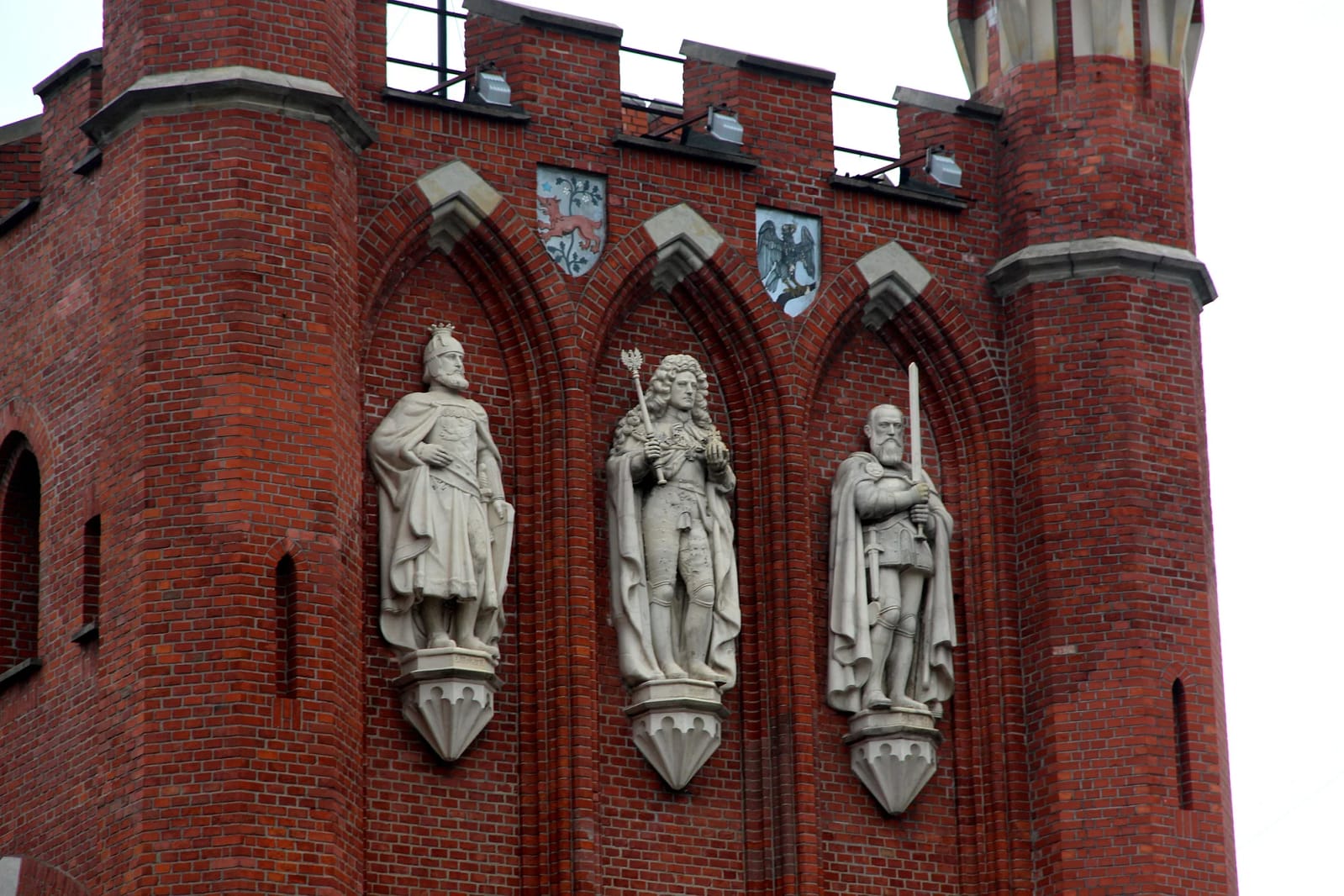
Its richly decorated red-brick façade is one of the finest examples of Prussian Gothic Revival architecture in Kaliningrad. Above the central arch stand three stone figures who embody the city’s complex history: King Ottokar II of Bohemia, the medieval ruler after whom Königsberg was named; Duke Albert of Prussia, founder of the University of Königsberg (Albertina); and King Frederick I of Prussia, the kingdom’s first crowned monarch. Together, they symbolize the political, cultural, and academic foundations of the historic city.
The gate suffered severe damage during the Second World War but was carefully restored for Kaliningrad’s 750th anniversary in 2005. It has since become home to a branch of the Museum of the World Ocean, where exhibitions explore the history of Königsberg’s fortifications, the development of the city, and Peter the Great’s famous visit to the region.
Standing beneath its soaring Gothic arches, it’s easy to imagine the generations of merchants, soldiers, scholars, and royal guests who once passed through these walls. More than any other surviving city gate, King’s Gate captures the grandeur and historical significance of Königsberg at the height of its influence.
The Brandenburg Gate (Brandenburger Tor)
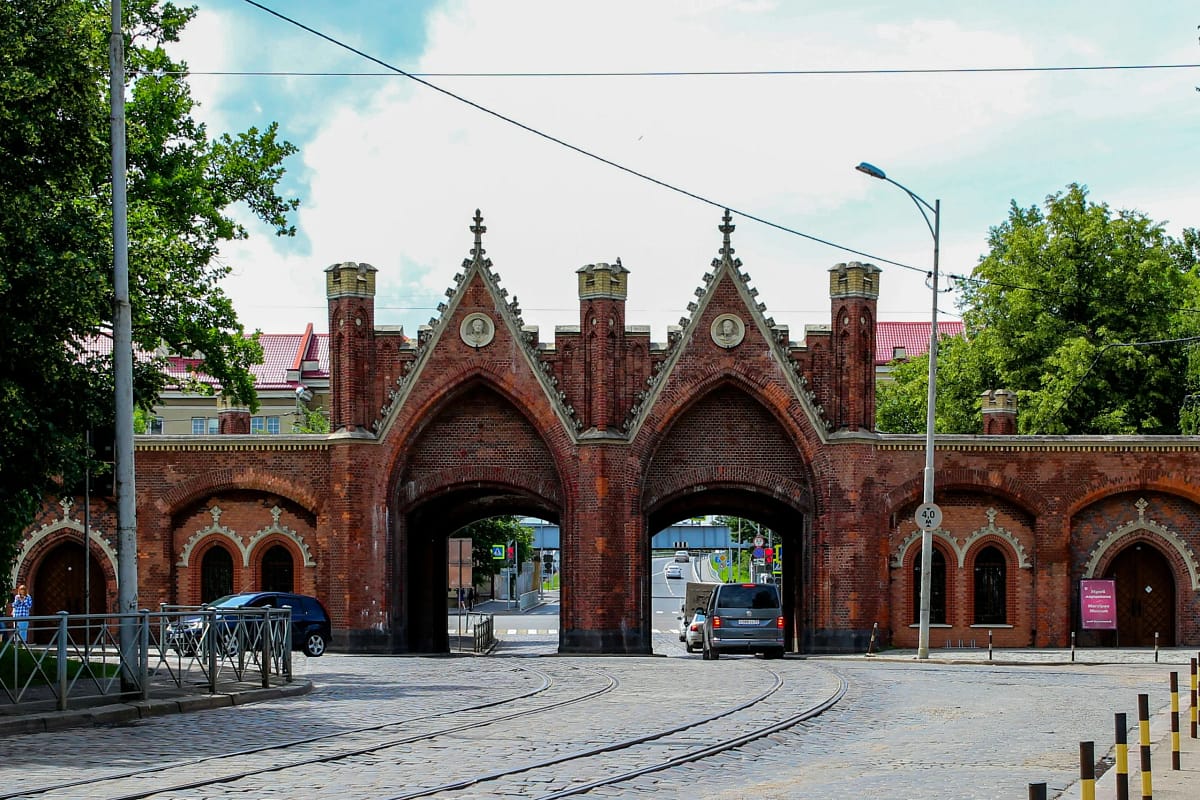
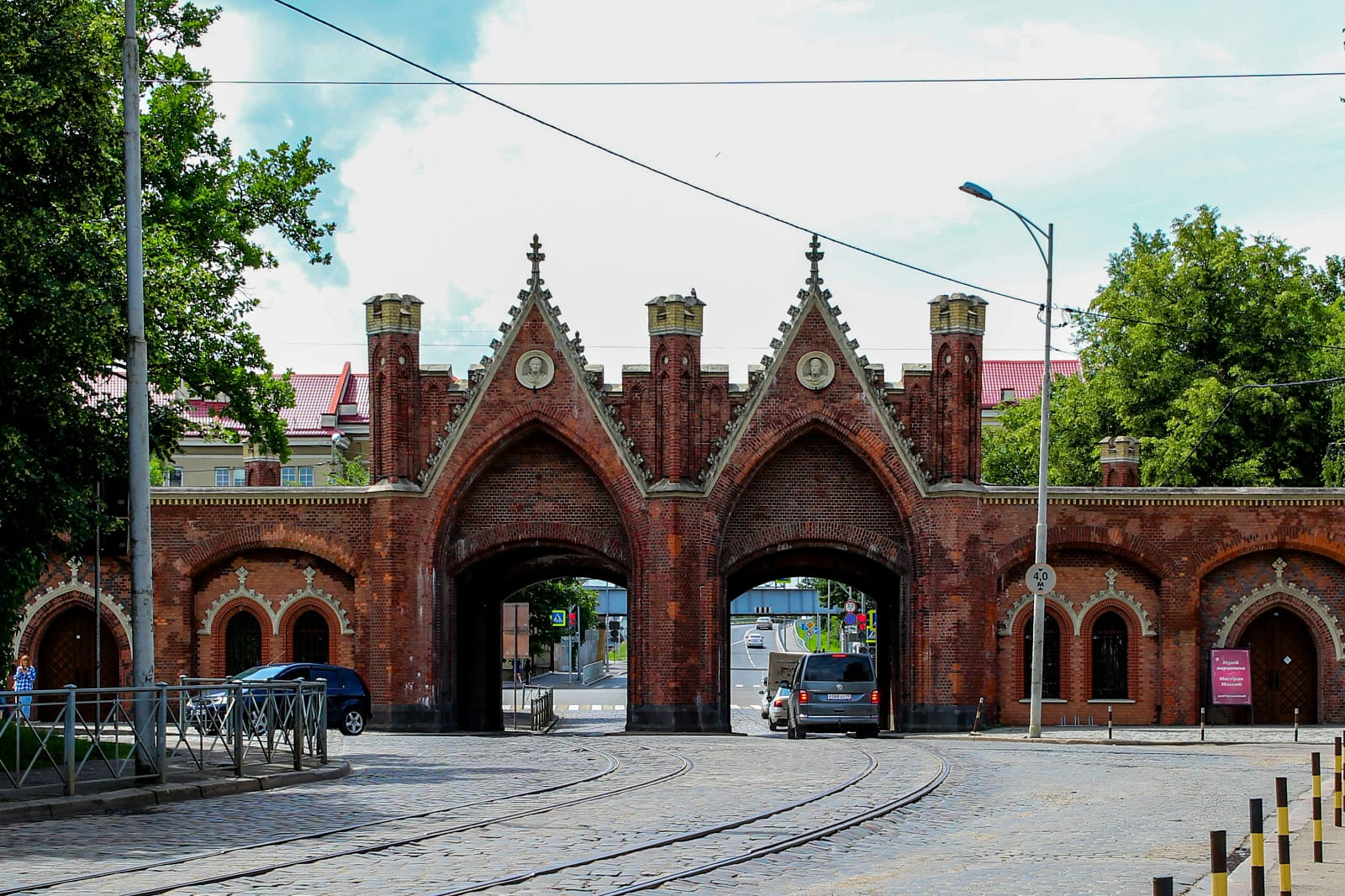
Unlike many of Kaliningrad’s historic city gates, the Brandenburg Gate has never become a monument frozen in time. More than 170 years after its construction, it continues to serve its original purpose as a gateway into the city, with cars and trams still passing beneath its impressive brick arches every day. This remarkable continuity makes it one of the most authentic reminders of Königsberg’s Prussian past.
The present-day gate was built between 1843 and 1850 as part of Königsberg’s second defensive ring, replacing an earlier wooden structure that had guarded the important road leading southwest toward Brandenburg, today’s village of Ushakovo. Named after this historic route rather than the famous Brandenburg near Berlin, the gate protected one of the city’s busiest approaches while simultaneously showcasing the architectural confidence of 19th-century Prussia.
Designed in the elegant Prussian Gothic Revival style, the Brandenburg Gate combines military engineering with decorative craftsmanship. Twin pointed arches, richly ornamented red brickwork, sandstone details, slender towers, and decorative pinnacles give the structure an almost cathedral-like appearance, despite its original defensive purpose. Like the other city gates, it was intended to project strength and prestige as much as security.
One of the gate’s most distinctive features is its uninterrupted history of use. While many sections of Königsberg’s fortifications were dismantled or repurposed as the city expanded, the Brandenburg Gate remained an essential transport route. Even after surviving the destruction of the Second World War, it continued to function as an active entrance, allowing modern visitors to experience the structure much as generations of merchants, soldiers, and travelers once did.
The gate now stands as one of Kaliningrad’s best-preserved architectural landmarks. Beyond its impressive exterior, visitors can also step inside to discover the charming Marzipan Museum, where the story of Königsberg’s famous confection is brought to life. Exhibits trace the history of the city’s renowned baked marzipan, while the adjoining shop offers the chance to sample this traditional East Prussian delicacy. Passing through the gate and perhaps leaving with a piece of Königsberger Marzipan offers a rare opportunity to experience a place where history, architecture, and local culinary heritage come together.
The Sackheim Gate (Sackheimer Tor)
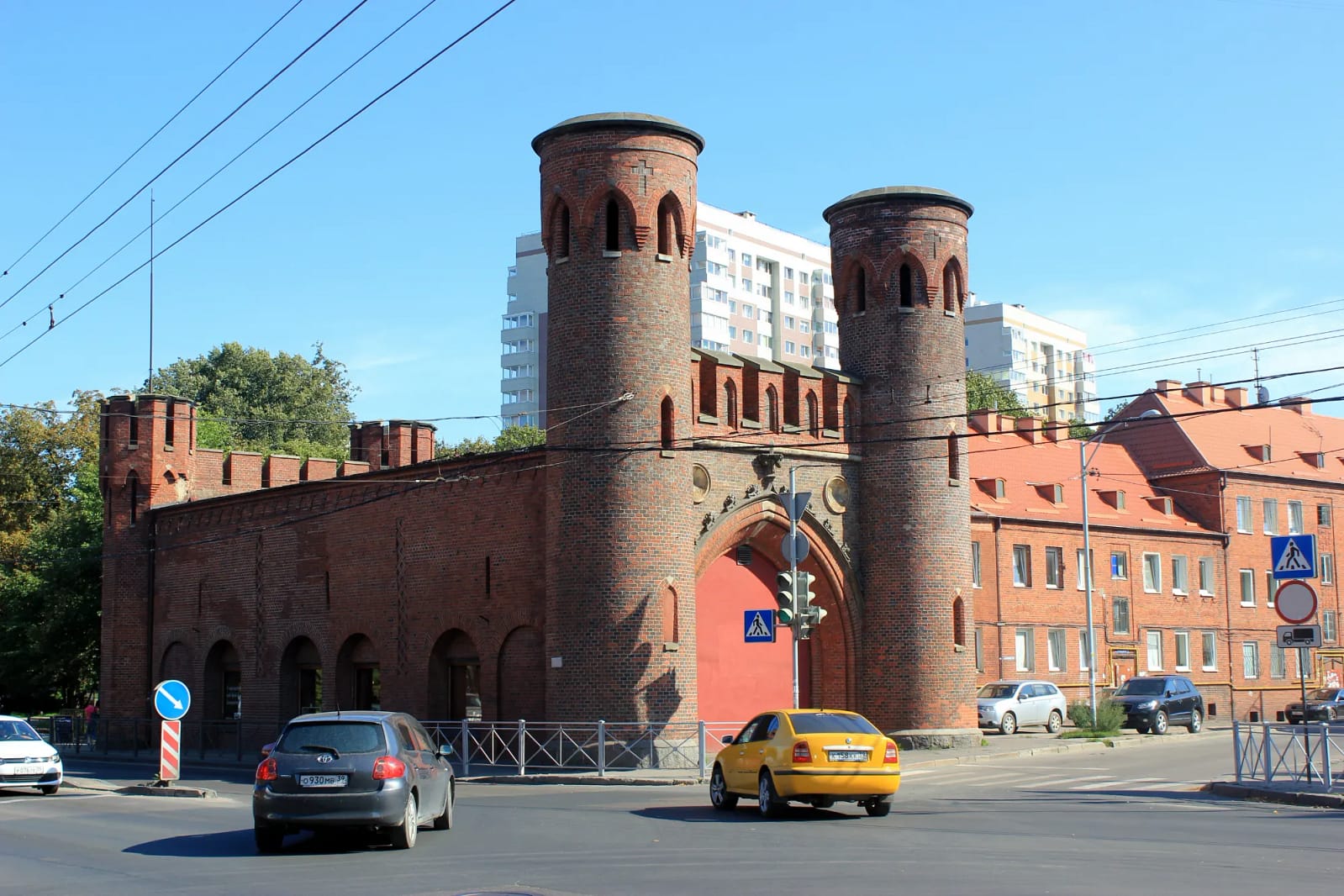
Often overshadowed by the grandeur of the nearby King’s Gate, the Sackheim Gate quietly tells a different story, one of transformation, survival, and reinvention. Located on the northeastern edge of the former fortress city, it once guarded the road leading toward the historic district of Sackheim, a thriving suburb of Königsberg that developed beyond the medieval city walls.
The present structure was built between 1860 and 1865 as part of Königsberg’s expanding defensive system. While sharing the characteristic red-brick Gothic Revival style found throughout the city’s fortifications, the Sackheim Gate was designed with a more restrained appearance than some of its more ceremonial counterparts. Its primary role was practical rather than symbolic, controlling movement into the city while forming part of the broader network of ramparts, moats, and defensive positions that surrounded Königsberg.
Like many of the city’s fortifications, the gate gradually lost its military importance as advances in artillery rendered traditional defensive walls obsolete. Yet unlike many historic structures that disappeared during the city’s turbulent twentieth century, the Sackheim Gate survived both war and post-war redevelopment, remaining a tangible link to Königsberg’s Prussian past.
In its latest chapter, the gate has found a new purpose as a cultural and creative space. Art exhibitions, community events, and temporary installations have brought new life to the historic structure, transforming a former military checkpoint into a place of culture and creativity. This modern reinvention reflects a broader trend across Kaliningrad, where many historic fortifications have been adapted for contemporary use while preserving their architectural heritage.
For visitors willing to venture beyond the city’s most famous landmarks, the Sackheim Gate offers a quieter and often more intimate glimpse into Kaliningrad’s layered history. It may lack the royal symbolism of the King’s Gate or the constant activity of the Brandenburg Gate, but its story of adaptation and renewal makes it one of the city’s most fascinating surviving fortifications.
The Friedland Gate (Friedländer Tor)
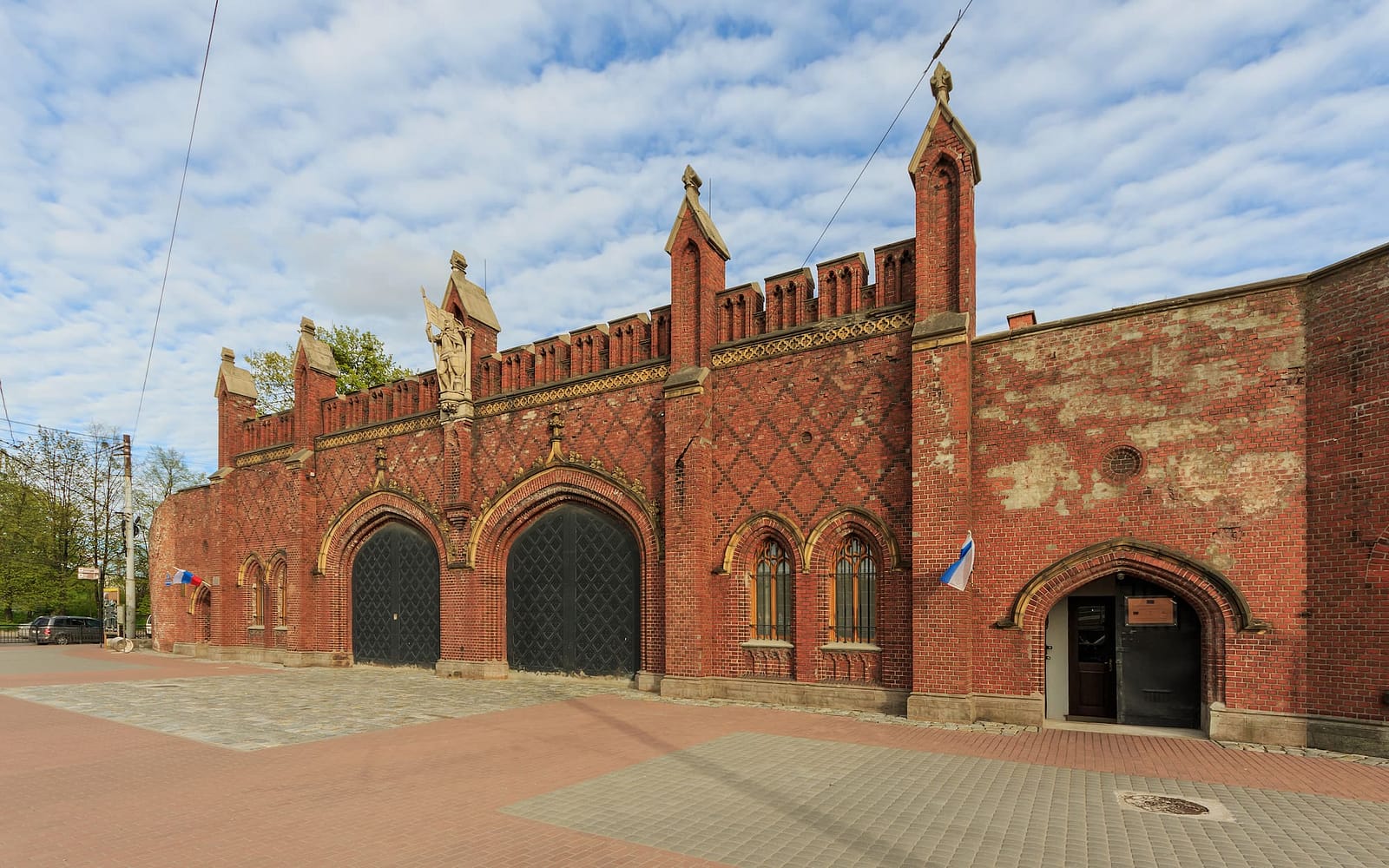
Built between 1857 and 1862 as the final major gate of Königsberg’s second defensive ring, the Friedland Gate marked the southern route toward the East Prussian town of Friedland, today’s Pravdinsk. Unlike the King’s Gate, which emphasized royal prestige, or the Brandenburg Gate, which still serves modern traffic, the Friedland Gate was designed primarily for military efficiency. Its two broad carriage portals, numerous casemates, and artillery embrasures reflected the lessons learned from earlier fortifications and made it one of the most functional gates in the city’s defensive network.
Architecturally, however, the gate is anything but plain. Built from deep red brick in the elegant Prussian Gothic Revival style, its pointed arches, decorative buttresses, slender pinnacles, and richly ornamented façade demonstrate how military engineering and artistic craftsmanship went hand in hand during the nineteenth century. Look closely and you’ll discover restored sculptures of Siegfried von Feuchtwangen, Grand Master of the Teutonic Order, and Friedrich von Zollern, commander of Balga Castle. Together, these two medieval figures connect the gate not only to Prussia but also to the much older legacy of the Teutonic Order.
Like the other city gates, the Friedland Gate gradually lost its military purpose during the early twentieth century. When sections of Königsberg’s defensive ramparts were dismantled, the road was rerouted around the structure, leaving the gate standing beside the new route rather than directly across it. After decades of neglect and use as a warehouse following the Second World War, an unexpected discovery during the restoration of nearby South Park changed its future forever. Archaeological finds recovered from the park inspired the creation of a museum, which opened inside the historic gate and continues to expand today.
The Friedland Gate Museum is widely regarded as one of Kaliningrad’s most immersive historical attractions. Rather than presenting rows of display cases, it combines original artifacts, reconstructed streets, multimedia installations, and interactive exhibitions to recreate everyday life in pre-war Königsberg. One of its most memorable experiences allows visitors to “walk” through the vanished streets of the old city, offering a fascinating glimpse into a world that largely disappeared after 1945. By combining authentic architecture with innovative storytelling, the Friedland Gate has become far more than just another surviving fortress. Ultimately, it is one of the best places to explore the rich history of Königsberg and better understand the transformation into modern Kaliningrad.
The Rossgarten Gate (Roßgärter Tor)
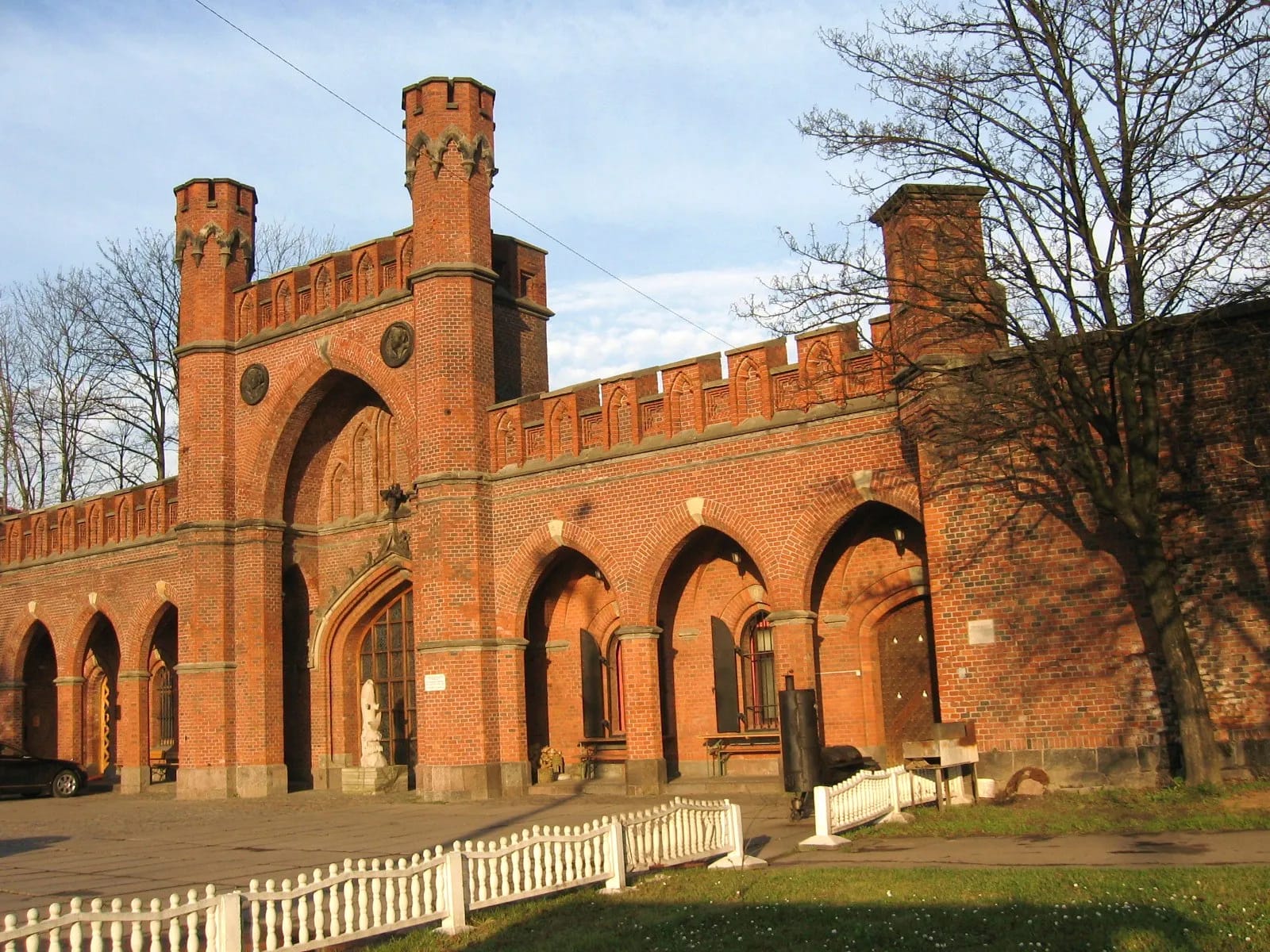
Standing beside the Upper Pond, the Rossgarten Gate immediately catches the eye with its elegant Neo Gothic design. Located at the northern edge of the former fortress city, it once guarded the road leading toward the Rossgarten district and formed an important part of Königsberg’s second defensive ring. Surrounded by some of the city’s most popular attractions, it seamlessly blends Prussian military architecture with modern urban life.
Constructed between 1852 and 1855, the gate was designed by the renowned Prussian architect Friedrich August Stüler, whose work helped shape much of nineteenth century Prussian architecture. Unlike purely functional fortifications, the Rossgarten Gate reflects Stüler’s vision of combining military engineering with refined architectural design. Its richly detailed red brick façade, pointed Gothic arches, slender corner towers, decorative pinnacles, and sandstone ornaments make it one of the finest examples of Prussian Gothic Revival architecture in Kaliningrad.
The gate originally controlled access to the northern approaches of Königsberg while also protecting nearby defensive moats and ramparts. Like the other city gates, it was equipped with heavy wooden doors, defensive embrasures, and a drawbridge spanning the surrounding moat. These features allowed the structure to function both as a secure military checkpoint and as an impressive ceremonial entrance into the city.
Although the defensive system gradually became obsolete in the early twentieth century, the Rossgarten Gate survived the Second World War with comparatively little damage. Rather than being demolished, it was carefully preserved and eventually found a new purpose. Today, the historic building is home to a well known restaurant, allowing visitors to experience one of Königsberg’s most beautiful fortifications from the inside while preserving its original architectural character.
Its location makes the Rossgarten Gate one of the easiest city gates to include in a walking tour. Just a few steps away lie the Amber Museum, housed in the former Dohna Tower, and the picturesque Upper Pond, where tree lined promenades and cafés invite visitors to slow down after exploring the city’s Prussian heritage. Few places in Kaliningrad illustrate so naturally how history and everyday life continue to exist side by side.
The Hidden Gates
Not every gate was built to impress. While some welcomed merchants, dignitaries, and royal guests, others served far more practical purposes behind the city’s defensive walls. The Railway Gate and the Ausfall Gate remain among Kaliningrad’s least visited historic landmarks. Their understated appearance hides fascinating stories of military engineering, the arrival of the railway, and the everyday life of a fortress city that once ranked among the strongest in Prussia.
The Railway Gate (Eisenbahntor)
Few visitors realize that one of Kaliningrad’s most unusual city gates lies hidden beneath Gvardeysky Avenue. At first glance, it hardly resembles a traditional city gate. Without soaring towers or elaborate decorations, many visitors pass by without realizing they are walking through a remarkable piece of Königsberg’s military and industrial history.
Constructed between 1866 and 1869, the Railway Gate was built during a period when rail transport was rapidly transforming Europe. Unlike the earlier city gates, which controlled roads leading into Königsberg, this gateway was specifically designed to allow the expanding railway network to pass through the city’s defensive fortifications. It formed part of Königsberg’s second defensive ring and reflected a changing era in which military engineering had to adapt to the demands of modern transportation.
Although the Railway Gate incorporates elements of the Prussian Gothic Revival style, its architecture is noticeably more restrained than that of Königsberg’s ceremonial gateways. Built primarily to accommodate rail traffic rather than impress arriving visitors, it emphasizes functionality over decoration. The broad pointed arch, robust red brick masonry, and integration into the surrounding ramparts reflect the practical challenges of combining a modern railway with one of Prussia’s most sophisticated fortress systems. While the gate lacks the elaborate sculptures and ornamental details found on landmarks such as the King’s Gate or Rossgarten Gate, its understated design makes it a fascinating example of how military architecture evolved during the age of industrialization.
As Königsberg expanded and its fortifications gradually lost their military significance, the railway route was eventually abandoned. Nowdays, trains no longer pass beneath the historic archway. Instead, the former railway corridor has been transformed into a pedestrian and cycling route, allowing visitors to experience the structure from a completely different perspective. Walking through the tunnel-like passage offers a rare opportunity to appreciate how seamlessly the old fortress once accommodated one of the nineteenth century’s greatest technological innovations.
In recent years, the Railway Gate has gained a new role as a center for heritage preservation. The building is now home to the Ruin Keepers, a volunteer organization dedicated to documenting and protecting the historic architecture of the former East Prussia. Their work has helped draw renewed attention to one of Kaliningrad’s least known yet historically significant city gates. While it may never rival the grandeur of the King’s Gate, the Railway Gate tells an equally important story about the city’s transition from a fortified stronghold to a modern industrial center.
The Ausfall Gate (Ausfalltor)
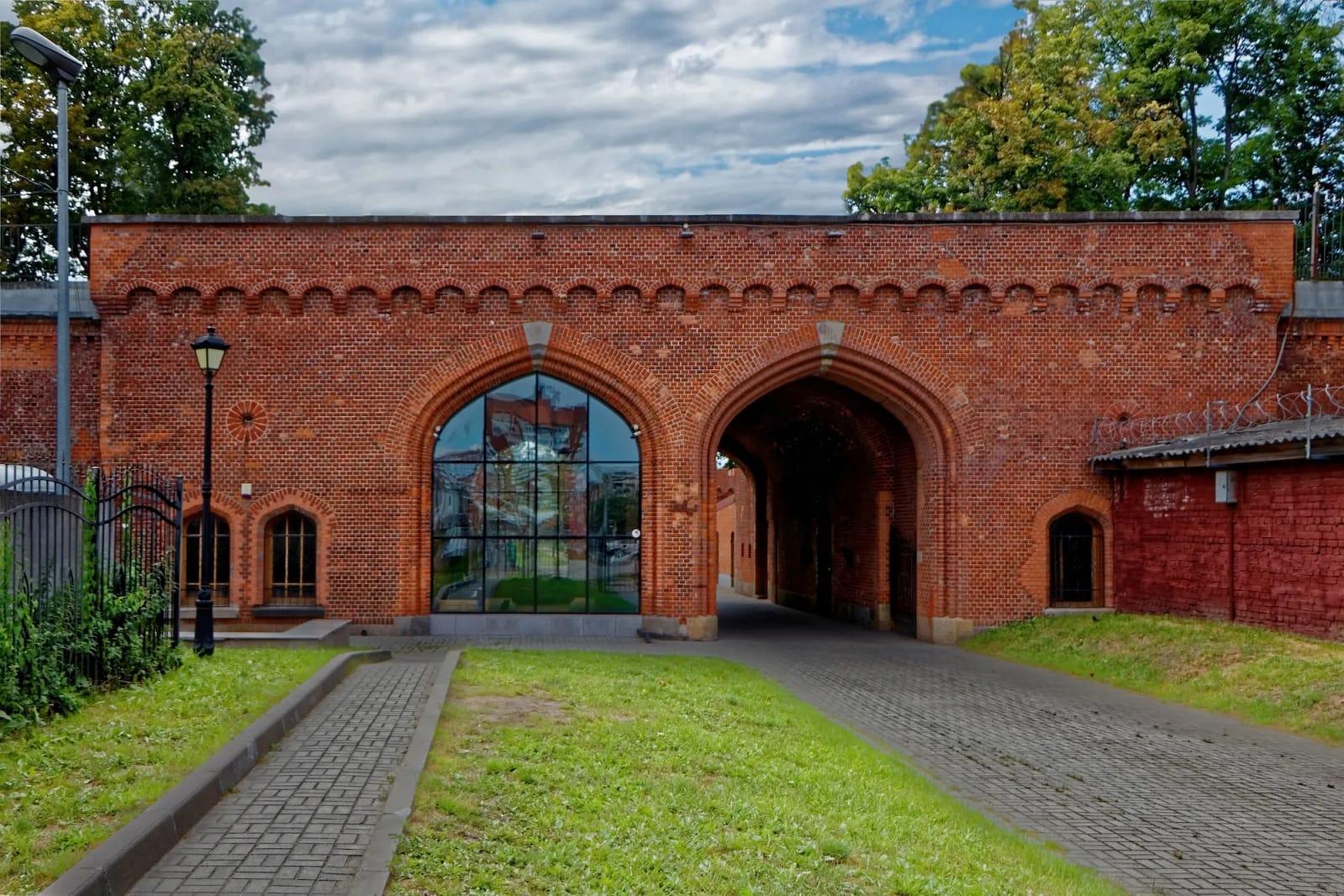
Unlike the grand ceremonial gates that once welcomed merchants, dignitaries, and travelers into Königsberg, the Ausfall Gate was built for an entirely different purpose. Hidden within the city’s defensive ramparts, it served as a discreet military passage, allowing soldiers to leave the fortress quickly during times of conflict. Its understated appearance reflects its practical role, making it one of Kaliningrad’s most overlooked yet historically fascinating fortifications.
Constructed in 1866 as part of Königsberg’s second defensive ring, the Ausfall Gate was integrated directly into the city’s earthworks rather than standing as an imposing gateway. Unlike the elaborate red brick monuments found elsewhere in the city, this structure was intentionally modest. A single pointed arch provided access through the ramparts, enabling troops to move efficiently between the fortress and the surrounding defensive positions without exposing themselves unnecessarily.
Although military technology soon rendered the fortress system obsolete, the Ausfall Gate survived the dramatic changes that transformed Königsberg into modern Kaliningrad. During the twentieth century, the surrounding fortifications gradually disappeared or were repurposed, leaving the gate as one of the few surviving reminders of the city’s once extensive defensive network.
Today, the Ausfall Gate has taken on a peaceful new role. Restored in the early twenty first century, it is home to a small Orthodox chapel dedicated to Saint George the Victorious, creating a striking contrast between its military origins and its present spiritual purpose. Surrounded by green parkland near the former fortifications, the gate offers a quiet place to reflect on the many layers of Kaliningrad’s history.
While it may not possess the grandeur of the King’s Gate or the architectural elegance of the Rossgarten Gate, the Ausfall Gate tells an equally important story. It reminds visitors that a fortress depended not only on monumental entrances but also on hidden passages designed for defense, mobility, and survival. As the final stop in a journey through Kaliningrad’s historic city gates, it provides a fitting reminder that even the smallest structures can preserve some of the city’s most compelling stories.
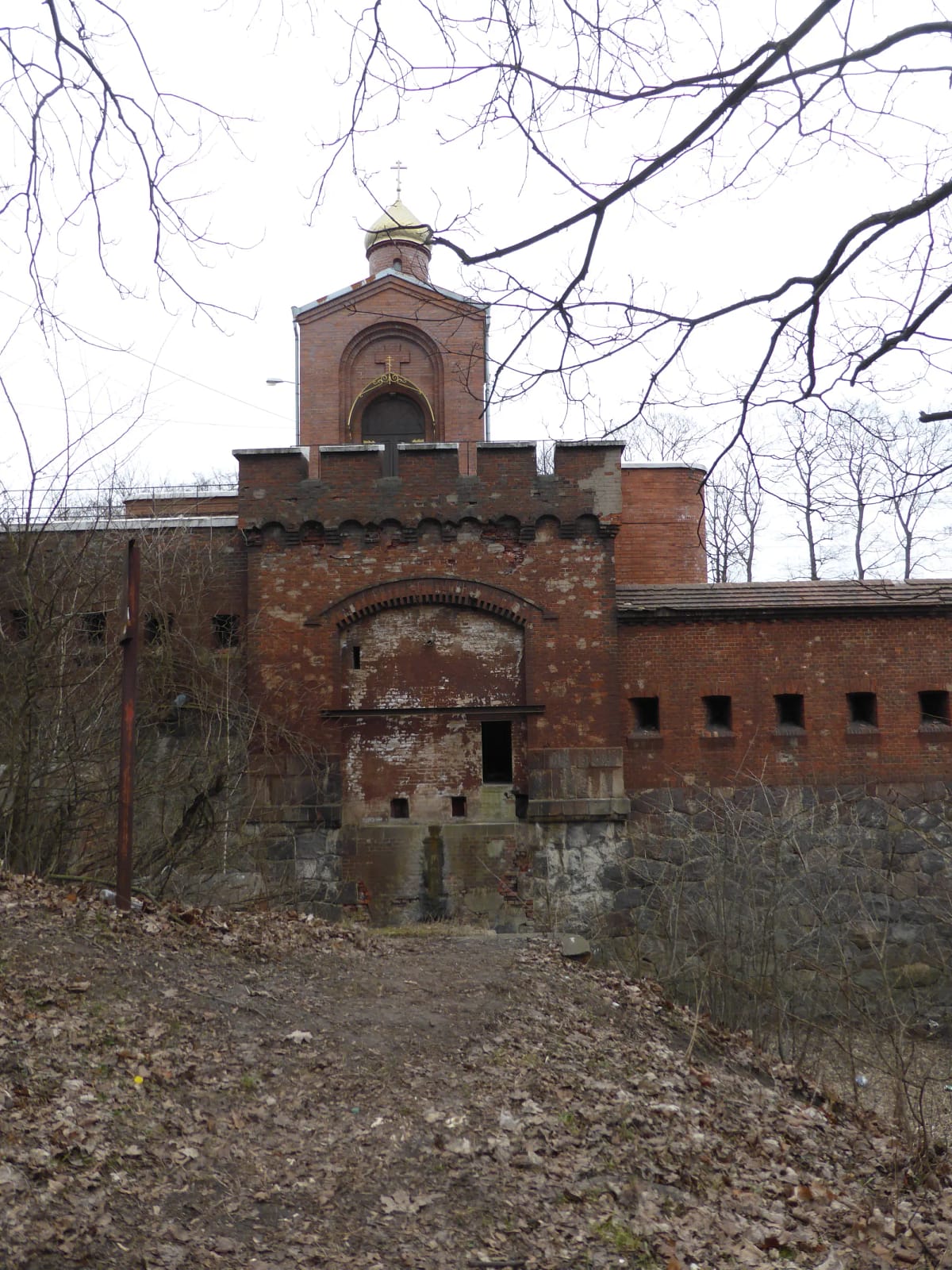
Together, these seven surviving gates are more than isolated landmarks. They are the last visible fragments of one of Europe’s greatest nineteenth century fortress cities, each preserving a different chapter in the remarkable story of Königsberg and modern Kaliningrad.