Header Picture: Anastasia Clark from Unsplash
Walking through Amalienau feels like stepping into another world. Quiet tree lined streets, elegant villas, blooming gardens, and winding avenues create an atmosphere that feels surprisingly untouched by the dramatic history surrounding it. While much of historic Königsberg disappeared after the Second World War, Amalienau remains one of the city’s best preserved districts and offers the closest glimpse of everyday life in pre war East Prussia.
The Story Behind Amalienau
Long before Amalienau became Königsberg’s most prestigious residential district, the area was little more than open countryside on the western outskirts of the city. At its heart stood a rural estate owned by the merchant and councilor Gustav Schnell, who named the property after his wife, Amalie. What began as a private estate would eventually lend its name to one of the most remarkable urban developments in East Prussia.
By the end of the nineteenth century, Königsberg was expanding rapidly. Growing prosperity and industrialization created a demand for healthier, more spacious neighborhoods away from the crowded city center. Recognizing this opportunity, the Königsberger Terrain- und Baugesellschaft acquired large parts of the estate and envisioned an entirely new kind of residential district. Rather than filling the land with dense rows of houses, the company sought to create an elegant suburb where architecture, gardens, and nature would exist in harmony.
To bring this vision to life, the renowned architect Friedrich Heitmann was entrusted with planning much of the new neighborhood. His designs established strict building guidelines that shaped Amalienau’s distinctive appearance. Villas were surrounded by generous gardens, streets followed gentle curves instead of rigid grids, and every home was designed as an individual work of architecture rather than part of a uniform housing development.
Completed largely between 1900 and 1914, Amalienau quickly became the preferred address of Königsberg’s wealthy merchants, professors, industrialists, and senior officials. More than simply an affluent suburb, it represented a new philosophy of urban living that emphasized space, greenery, and architectural diversity. More than a century later, that original vision remains remarkably intact, making Amalienau one of the best preserved historic villa districts in the former East Prussia.
The Garden City Vision
At the beginning of the twentieth century, Amalienau represented a new way of thinking about urban life. Rather than extending Königsberg with densely packed streets and uniform apartment blocks, its planners embraced the principles of the emerging Garden City movement, an international urban planning concept that sought to combine the comforts of city living with the health and tranquility of the countryside.
Inspired by the emerging Garden City movement that was gaining popularity across Europe, the neighborhood was carefully planned to create a harmonious relationship between architecture and nature. Broad avenues lined with mature trees replaced narrow streets, generous private gardens surrounded every villa, and green spaces were woven naturally into the layout. Even the roads avoided rigid right angles, following gentle curves that made the district feel organic rather than engineered.
Strict building regulations ensured that no single house dominated the streetscape. Villas were limited in height, positioned well back from the road, and designed as individual architectural works rather than repetitive rows of identical homes. The result was a neighborhood where every building had its own character while contributing to a remarkably cohesive overall appearance.
More than a century later, that original vision remains clearly visible. Walking through Amalienau today still feels remarkably different from the rest of Kaliningrad. The winding streets, mature chestnut trees, carefully planned gardens, and elegant villas continue to preserve the atmosphere that its planners imagined over one hundred years ago. Even today, visitors can recognize the original planning philosophy in almost every street and garden.
What Makes Amalienau Unique
Walking Through Amalienau
The best way to experience Amalienau is simply on foot. Unlike Kaliningrad’s busy city center, this historic neighborhood invites visitors to slow down and wander without a fixed itinerary. Around almost every corner, elegant villas emerge between mature trees, while quiet streets and carefully landscaped gardens create an atmosphere that feels remarkably untouched by time.
As you stroll through the district, you’ll quickly notice that no two streets feel exactly alike. Gentle curves replace rigid city blocks, revealing constantly changing views of red brick villas, decorative façades, timber details, and flowering gardens. Every turn offers a new perspective, making even a short walk feel like a leisurely architectural tour.
Despite its reputation as an affluent residential district, Amalienau was never designed to impress through sheer size or monumental buildings. Instead, its beauty lies in the careful balance between architecture and landscape. Villas are framed by old chestnut and lime trees, front gardens soften the streetscape, and generous green spaces allow each house to stand on its own while remaining part of a harmonious whole.
Perhaps the greatest charm of Amalienau is its quiet authenticity. Many of the villas continue to serve as private residences, embassies, or offices, giving the neighborhood a lived in character rather than the atmosphere of an open air museum. Visitors are not simply observing history from behind barriers. They are walking through a district that has remained an active part of the city for more than a century.
Architectural Highlights of Amalienau
Amalienau was never intended to be a neighborhood of identical villas. Instead, wealthy merchants, professors, industrialists, and senior officials commissioned leading architects to design homes that reflected their individual tastes while respecting the district’s overall planning concept. As a result, nearly every villa tells its own story through its architecture, decorative details, and former residents.
Today, many of these historic residences continue to serve as private homes, diplomatic buildings, schools, or cultural institutions. While most cannot be visited inside, their beautifully preserved façades make Amalienau one of the finest open air architecture museums in the former East Prussia.
Villa Schmidt
The Home of a Successful Entrepreneur
Among Amalienau’s elegant residences, Villa Schmidt tells the story of one of Königsberg’s most successful businessmen. Completed in 1903, the villa was commissioned by Eduard Schmidt, owner of the renowned Königin Luise mineral water company. At a time when Amalienau was emerging as the city’s most prestigious residential district, building a home here reflected not only financial success but also a desire for a quieter and healthier lifestyle away from the increasingly busy city centre.
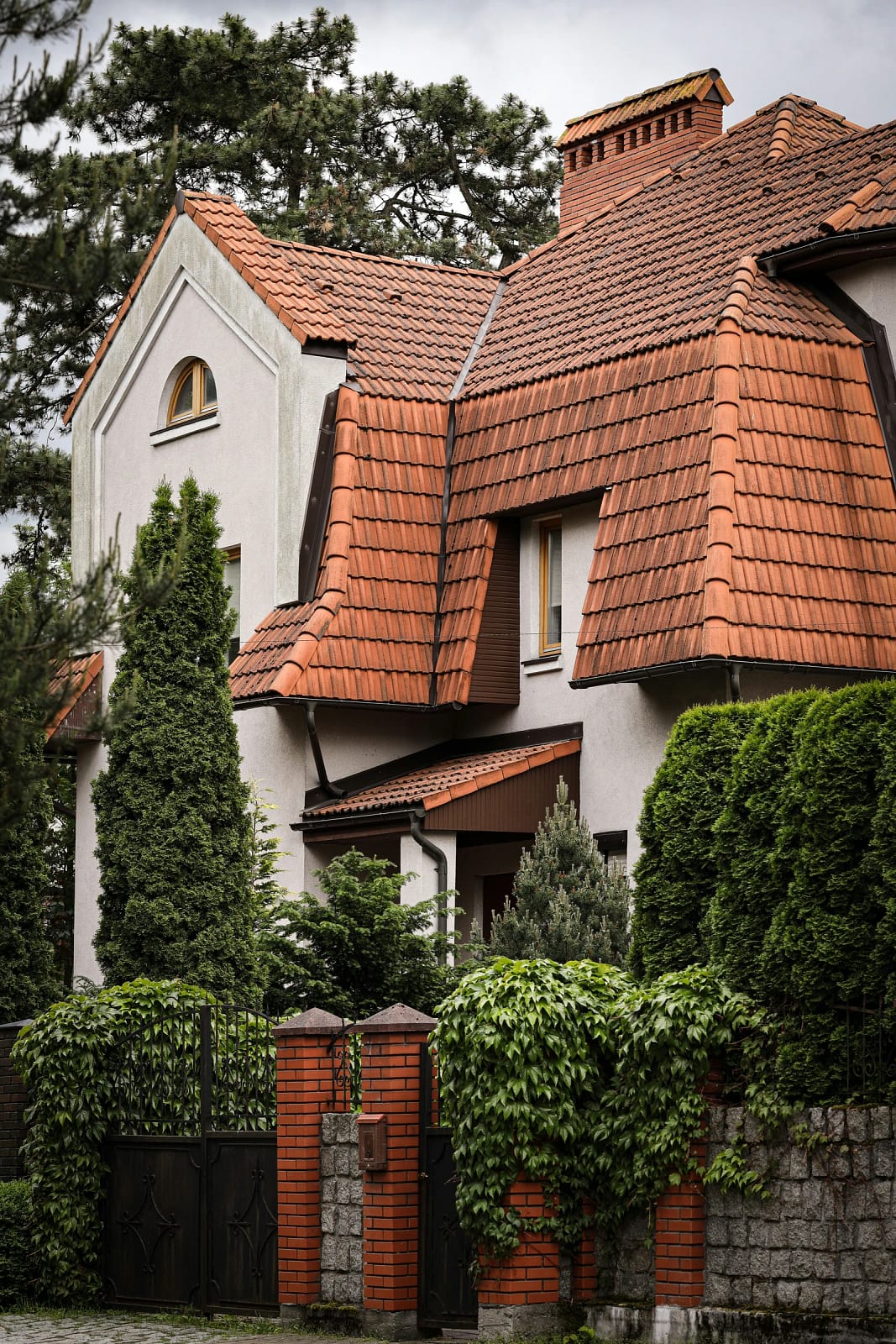
Rather than creating an extravagant mansion, Schmidt’s residence embodies the understated elegance that became synonymous with Amalienau. Its picturesque composition, steep rooflines, decorative gables, and carefully crafted brick façade convey refinement without excess. Every elevation reveals slightly different architectural details, reflecting the early twentieth century preference for individuality over strict symmetry. The villa was designed to impress through balance and craftsmanship rather than sheer size.
For entrepreneurs and professionals like Eduard Schmidt, Amalienau represented a new vision of urban living. Spacious plots, landscaped gardens, and tree lined avenues offered an environment where business success could be matched by comfort and tranquillity at home. Villa Schmidt perfectly illustrates this changing lifestyle, combining architectural quality with the principles that made Amalienau one of the most desirable residential districts in Königsberg.
Remarkably, the villa survived the destruction that reshaped much of the city during the Second World War. Today it serves as a municipal kindergarten, allowing the historic building to remain part of everyday community life. Although visitors cannot enter the interior, the beautifully preserved exterior continues to reflect the prosperity, optimism, and architectural ambition that defined Amalienau during its golden age.
Villa Makowski
Architecture Without Symmetry
If Villa Schmidt reflects the ambitions of Königsberg’s successful entrepreneurs, Villa Makowski showcases the architectural creativity that made Amalienau unlike any other neighborhood in East Prussia. Designed during the district’s most dynamic years of development, the villa demonstrates how architects abandoned rigid symmetry in favor of more picturesque and individual compositions.
At first glance, the building appears almost effortless in its design, yet a closer look reveals a carefully orchestrated balance of forms. Projecting bays, steeply pitched roofs, decorative gables, and varying window shapes combine to create a façade that changes depending on where you stand. Rather than presenting a single formal front, Villa Makowski was designed to be experienced from multiple perspectives, rewarding visitors who take the time to walk around it.
This approach reflected a broader shift in residential architecture at the beginning of the twentieth century. Inspired by the ideals of the Garden City movement, architects sought to create homes that felt naturally integrated into their surroundings instead of dominating them. Villa Makowski achieves this through its balanced proportions, thoughtful use of brick, and seamless relationship with the surrounding gardens and tree lined streets. The result is a residence that feels both elegant and inviting, despite its impressive scale.
More than a century later, Villa Makowski remains one of the finest examples of Amalienau’s architectural identity. While it continues to serve as a private residence and cannot be visited inside, its beautifully preserved exterior offers a remarkable opportunity to appreciate the creativity and craftsmanship that transformed Amalienau into one of Königsberg’s most distinguished residential districts.
The Serenity of Poplavok Pond
No walk through Amalienau feels complete without spending a few moments at Poplavok Pond. Nestled among elegant villas and tree lined streets, the small lake has been part of the neighborhood’s identity since the district was first planned at the beginning of the twentieth century. Rather than serving as a decorative afterthought, the pond formed an integral element of Amalienau’s Garden City concept, where architecture and nature were carefully balanced to create a healthier and more pleasant living environment.
The gently curving shoreline, mature trees, and reflections of historic villas in the water create one of the district’s most picturesque scenes. While the surrounding streets showcase Amalienau’s architectural heritage, the pond reveals another side of the neighborhood: a peaceful public space designed for relaxation and everyday life. More than a century later, residents still stroll along its paths, sit on its benches, and enjoy the same tranquil atmosphere envisioned by the district’s original planners.
Seasonal changes give Poplavok Pond a different character throughout the year. In spring and summer, lush greenery frames the water and migratory birds frequently visit the pond. Autumn transforms the surrounding trees into shades of gold and amber, while winter occasionally blankets the landscape in snow, creating one of Kaliningrad’s most photogenic historic settings.
Although modest in size, Poplavok Pond perfectly captures what makes Amalienau unique. It is not simply a collection of beautiful villas, but a carefully planned neighborhood where parks, gardens, streets, and architecture work together as a harmonious whole. Spending a few quiet minutes here helps visitors understand why Amalienau remains one of Kaliningrad’s most beloved historic districts.
Villa Rosenow
Where Craftsmanship Takes Center Stage
Not every remarkable building draws attention through grandeur alone. Villa Rosenow is one of those residences whose beauty reveals itself gradually, rewarding visitors who slow down and look beyond the overall silhouette. Rather than relying on dramatic proportions or lavish ornamentation, its character lies in the quality of its craftsmanship and the remarkable attention paid to even the smallest architectural details.
Look closely and you’ll notice carefully laid brickwork, finely proportioned windows, decorative gables, and subtle ornamental elements that bring texture and depth to the façade. Nothing appears excessive, yet every detail contributes to the building’s refined appearance. This quiet elegance reflects the philosophy that shaped many of Amalienau’s finest homes, where skilled craftsmanship often spoke louder than elaborate decoration.
Villa Rosenow also illustrates another defining characteristic of the district. Instead of dominating the streetscape, the residence forms part of a carefully composed sequence of villas, gardens, and mature trees. Each building was designed to complement its surroundings, allowing the neighborhood to feel coherent without becoming repetitive. Walking through Amalienau, it is this balance between individuality and harmony that makes every street feel distinctive.
More than a century after its construction, Villa Rosenow continues to preserve this sense of quiet refinement. While the house remains a private residence, its beautifully preserved exterior offers a glimpse into the extraordinary level of craftsmanship that transformed Amalienau into one of Königsberg’s most prestigious residential districts. It serves as a reminder that the true beauty of historic architecture often lies not in what immediately captures the eye, but in the details discovered by those who take the time to look a little closer.
Villa Winter
A Home Designed for Everyday Elegance
By the early twentieth century, Amalienau had become one of Königsberg’s most desirable residential districts. Villa Winter captures this transformation perfectly. More than an impressive private residence, it reflects a changing way of life in which comfort, privacy, and access to nature became just as important as architectural prestige.
Unlike the dense neighborhoods closer to the historic city center, Amalienau offered something entirely new. Families could enjoy spacious homes surrounded by gardens, broad tree lined avenues, and a quieter environment without sacrificing easy access to the city. Villa Winter embodies this vision of modern living, where thoughtful planning created not only beautiful houses but an exceptional quality of life.
Its carefully balanced architecture avoids unnecessary extravagance. Decorative brickwork, elegant gables, and well proportioned façades create a residence that feels distinguished yet welcoming. Rather than dominating the street, the villa blends naturally into its surroundings, reflecting the broader planning philosophy that shaped the entire district. Here, architecture was designed to complement everyday life rather than simply display wealth.
Today, Villa Winter remains an important part of Amalienau’s historic streetscape. Although it continues to serve as a private residence and cannot be visited inside, its exterior still conveys the quiet sophistication that once attracted Königsberg’s merchants, academics, and professionals to this remarkable neighborhood. More than a century later, it reminds visitors that Amalienau was never intended to be an architectural showcase alone. It was created as a place where people could truly enjoy living.
Queen Louise Church
From Parish Church to Puppet Theatre
Among the elegant villas and leafy avenues of Amalienau, one building immediately draws the eye with its soaring tower and distinctive red brick architecture. Queen Louise Church was built between 1899 and 1901 and dedicated to Queen Louise of Prussia, one of the most admired figures in Prussian history. Designed by the Berlin architect Fritz Heitmann, the church quickly became both the spiritual center of the growing neighborhood and one of Königsberg’s finest examples of Neo Romanesque architecture.
Unlike the medieval churches found in the historic city center, Queen Louise Church reflected the optimism of a modern residential district that was expanding rapidly at the turn of the twentieth century. Its rounded arches, solid brick construction, and elegant proportions created a welcoming landmark that complemented the surrounding villas while remaining visually distinct. The church’s prominent location ensured that its tower became a familiar point of orientation throughout Amalienau.
The building suffered damage during the Second World War but survived largely intact. Rather than being demolished, it was carefully reconstructed during the Soviet period under the guidance of architect Yuri Vaganov, who transformed the former church into the Kaliningrad Regional Puppet Theatre. This sensitive adaptation preserved much of the historic exterior while giving the building an entirely new cultural role.
Today, the former church continues to be one of Amalienau’s most recognizable landmarks. Although its interior no longer serves a religious purpose, the building remains a remarkable example of how historic architecture can be thoughtfully preserved and adapted for contemporary use. Whether admired for its architectural beauty, its unusual history, or its role in modern Kaliningrad’s cultural life, Queen Louise Church forms an essential stop on any walk through the district.
Suggested Walking Route
Experience Amalienau at Your Own Pace
The best way to discover Amalienau is simply on foot. Unlike many historic districts where individual landmarks compete for attention, the true beauty of Amalienau lies in the journey itself. Quiet streets, mature trees, elegant villas, and carefully planned green spaces reveal themselves gradually, rewarding those who take the time to slow down.
A leisurely walk begins at the Queen Louise Church, whose distinctive tower serves as one of the neighborhood’s most recognizable landmarks. From there, continue along the leafy streets toward Villa Schmidt, before exploring the surrounding residential avenues where several of Amalienau’s finest villas, including Villa Makowski, Villa Rosenow, and Villa Winter, can be admired from the public streets.
As you continue your walk, pause at Poplavok Pond, one of the district’s most peaceful green spaces. The reflections of historic villas in the water and the surrounding gardens perfectly capture the atmosphere that has defined Amalienau for more than a century.
Before leaving the neighborhood, consider visiting the Altes Haus Museum. The carefully restored interiors offer a fascinating glimpse into everyday life in early twentieth century Königsberg and provide valuable historical context for everything you’ve seen throughout the district.
Allow around 1.5 to 2 hours to fully appreciate the neighborhood, though many visitors find themselves lingering much longer. Amalienau is best experienced without a strict schedule. Every quiet street, hidden architectural detail, and shaded garden invites you to slow down and enjoy one of Kaliningrad’s most remarkable historic quarters.
Final Thoughts
Long after leaving Amalienau, what often stays with visitors is not a single villa or landmark, but the quiet rhythm of tree lined streets, elegant architecture, and gardens that have remained remarkably unchanged for more than a century. It is a rare corner of Kaliningrad where history is experienced not through monuments alone, but through the simple pleasure of walking.
More than just a collection of beautiful villas, Amalienau tells the story of a neighborhood that was thoughtfully planned, carefully preserved, and continually reimagined throughout its history. Every winding street, landscaped garden, and historic residence reflects the ambition to create a place where architecture and nature exist in harmony.
Whether you come to admire its remarkable buildings, explore Königsberg’s architectural heritage, or simply enjoy one of Kaliningrad’s most peaceful walks, Amalienau offers an experience that reveals a quieter, more intimate side of the city. It is a destination best explored without rushing, where every corner invites you to pause, look a little closer, and appreciate the enduring charm of one of Kaliningrad’s most distinctive historic districts.