Header Picture from Alexandr Popadin on Unsplash
As you cross one of the historic bridges onto Kant Island, the noise of modern Kaliningrad fades away. Towering trees, the Gothic cathedral, and the final resting place of Immanuel Kant create one of the city’s most peaceful and historically significant settings.
No trip to Kaliningrad is truly complete without visiting this remarkable island. Known historically as Kneiphof, it once formed the vibrant medieval heart of Königsberg before being almost entirely destroyed during the Second World War. Today, this tranquil green oasis in the center of the city is where centuries of European history, striking Gothic architecture, and the enduring legacy of one of the world’s greatest philosophers come together.
Whether you want to follow in Kant’s footsteps, admire the magnificent Königsberg Cathedral, attend an organ concert, or simply enjoy a leisurely walk along the Pregolya River, Kant Island offers an experience unlike anywhere else in Kaliningrad. Here, the past doesn’t simply survive. It continues to shape the atmosphere of the present.
Kneiphof: From Town to Green Oasis
Long before it became known as Kant Island, this small island in the Pregolya River was the bustling medieval district of Kneiphof. Founded in the 14th century, it quickly developed into one of the three independent towns that eventually formed Königsberg. Thanks to its strategic location on the river, Kneiphof became an important commercial center and a member of the Hanseatic League, attracting merchants from across Northern Europe.
For centuries, narrow streets, merchants’ houses, churches, and busy marketplaces filled the island. It remained one of Königsberg’s economic and cultural centers until the final years of the Second World War.
During the British air raids of 1944 and the Battle of Königsberg in 1945, Kneiphof was almost completely destroyed. Unlike many historic European city centers, the island was never rebuilt as it had been before the war. Most of the surviving ruins were cleared in the following decades, leaving only Königsberg Cathedral standing as a reminder of the former city.
Today, the former streets have given way to tree-lined paths, open green spaces, and peaceful walking trails. Rather than recreating the lost medieval district, Kaliningrad transformed the island into a public park where visitors can reflect on its remarkable history while enjoying one of the city’s most tranquil settings.
Following in Immanuel Kant’s Footsteps

Kant’s Tomb: The Sanctuary of Reason
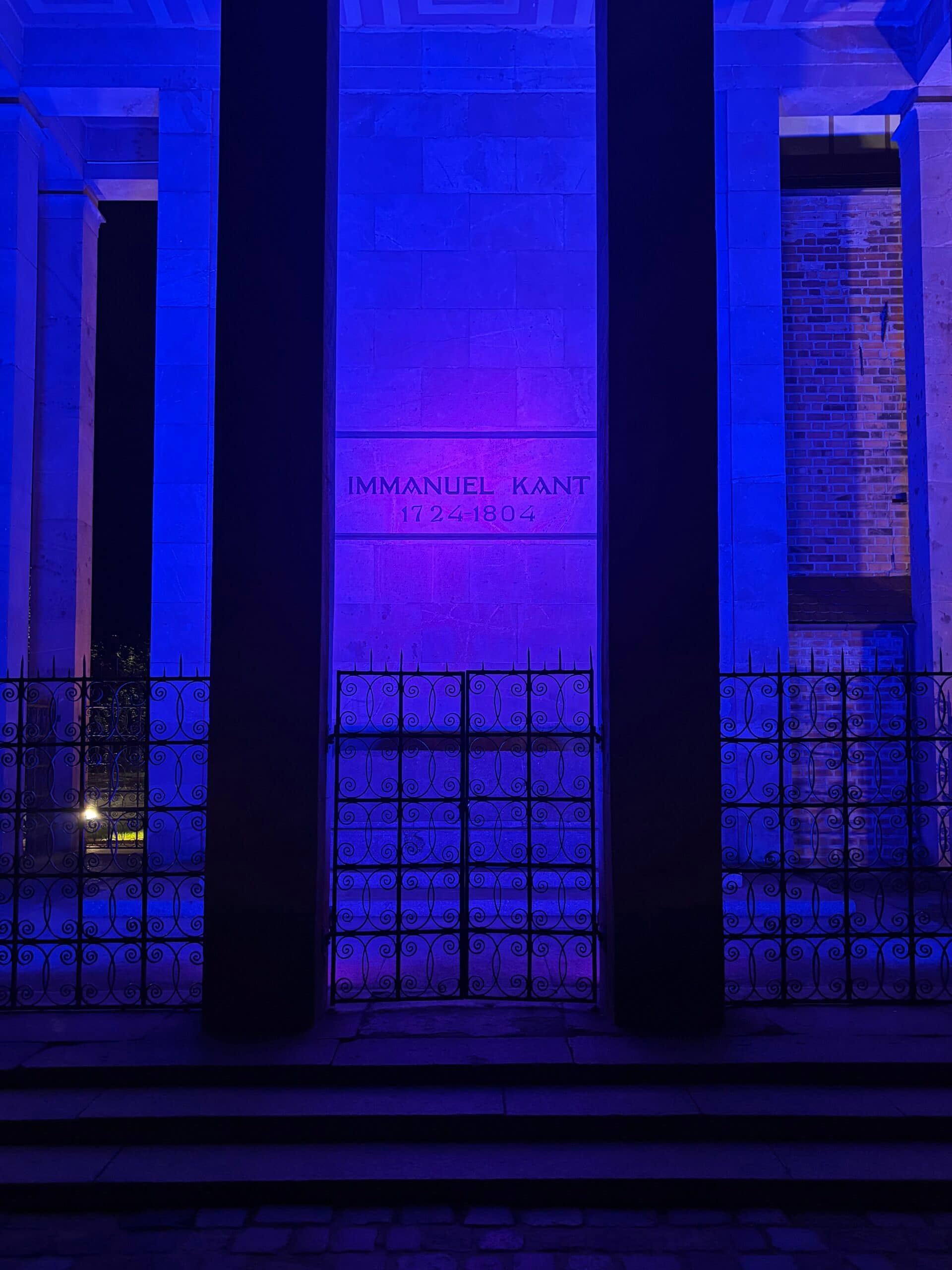
Along the northeastern corner of Königsberg Cathedral stands one of Kaliningrad’s most iconic landmarks: the tomb of Immanuel Kant. Simple yet dignified in appearance, the memorial marks the final resting place of the philosopher whose ideas transformed Western thought and whose name has become inseparable from the city itself.
Kant died in 1804 and was originally buried inside the cathedral in the so-called Professors’ Vault adjoining the cathedral’s northern wall. In 1809, this crypt was replaced by an open colonnaded gallery, historically known as the Stoa Kantiana. By 1924, the 200th anniversary of Kant’s birth, this structure had fallen into disrepair and was replaced by the present-day neoclassical mausoleum designed by German architect Friedrich Lahrs, featuring dark granite columns inspired by classical architecture. Remarkably, the tomb survived the devastation of the Second World War even as much of the surrounding city was reduced to ruins, making it one of the few authentic historical monuments that still connect modern Kaliningrad with its Königsberg past.
Today, visitors from around the world pause here to reflect on Kant’s extraordinary legacy. Whether you have read his works or are simply curious about the man behind the name, standing beside his tomb offers a powerful reminder that some ideas can outlive even the cities in which they were born.
The Gothic Cathedral & Its Grand Organ
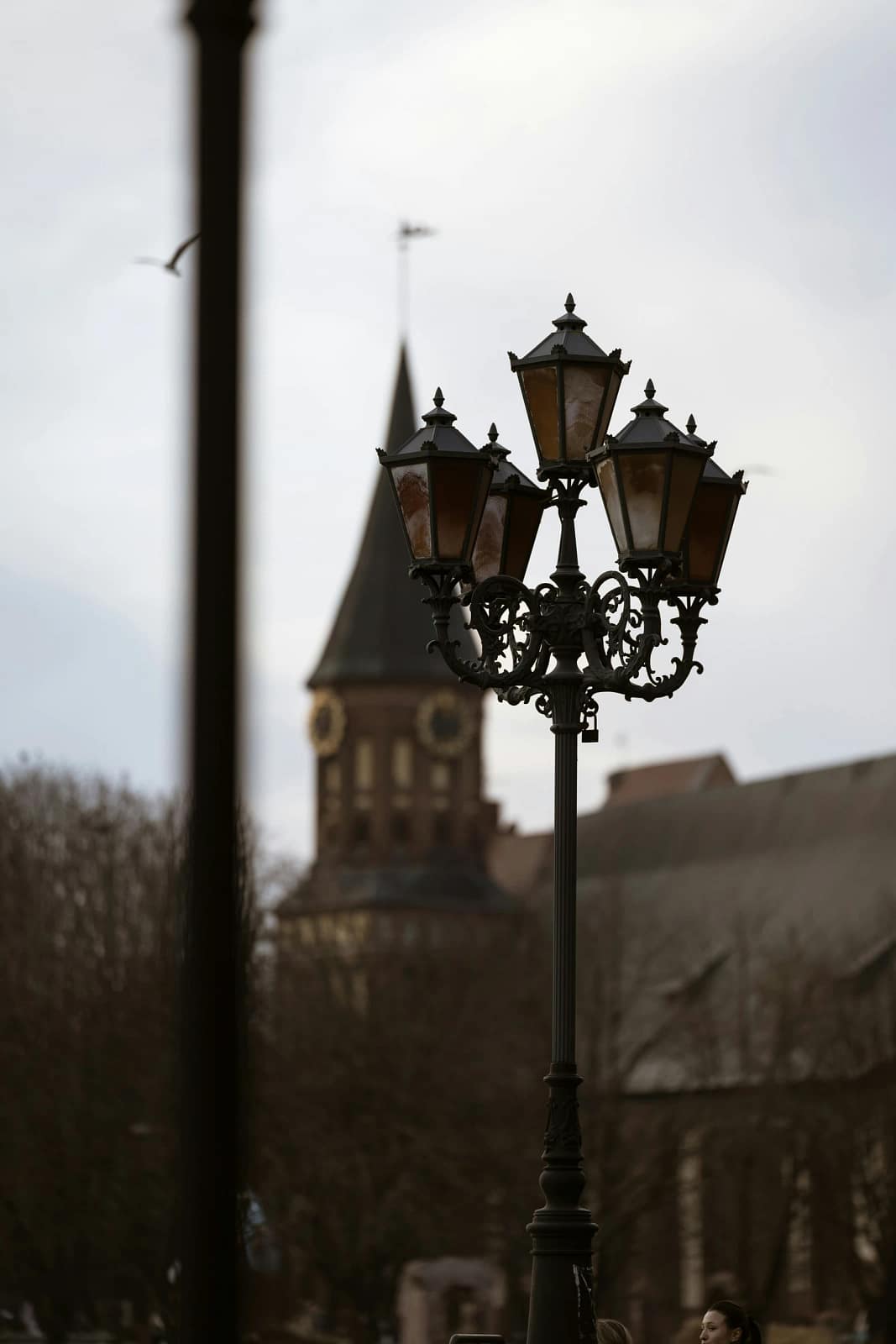
Standing at the center of Kant Island, Königsberg Cathedral is one of Kaliningrad’s most recognizable landmarks and the city’s most important surviving medieval monument. Construction of the cathedral is generally considered to have begun around 1330, though the precise date is uncertain. The year 1333 marks the official founding document, a treaty between Bishop Johann Clare and Grand Master Luther von Braunschweig, which secured the cathedral chapter’s autonomy and is therefore cited as the official foundation date. Over the following decades the cathedral became a masterpiece of North German Brick Gothic architecture, reflecting the distinctive style found throughout the former Hanseatic cities along the Baltic coast.
For centuries, the cathedral served as the spiritual heart of Königsberg. It witnessed royal ceremonies, university events, and generations of citizens passing through its doors. During the Second World War, however, the building suffered devastating damage in the British air raids of 1944 and remained a roofless ruin for decades. A careful restoration, completed after the fall of the Soviet Union, returned the cathedral to its former grandeur while preserving its historical character.
Today, the cathedral serves primarily as a cultural and historical center rather than an active parish church. Inside, visitors can explore exhibitions dedicated to the history of Königsberg and the life and philosophy of Immanuel Kant. The serene interior offers a striking contrast to the lively city outside, inviting guests to slow down and appreciate centuries of history.
The cathedral is equally renowned for its magnificent organ complex, considered one of the largest in Russia. Regular organ concerts fill the Gothic halls with music ranging from Bach to contemporary compositions, creating an unforgettable atmosphere that draws both music lovers and casual visitors. Even travelers with little interest in classical music often describe the performances as one of the highlights of their visit to Kaliningrad.
Whether you come for its remarkable architecture, its historical significance, or the powerful sound of its grand organ, Königsberg Cathedral remains the defining landmark of Kant Island and an essential stop for anyone exploring Kaliningrad.
Discover the Immanuel Kant Museum
Housed within Königsberg Cathedral, the Immanuel Kant Museum offers a fascinating journey through the life and legacy of the philosopher. Rather than focusing solely on his writings, the exhibition places Kant within the broader story of Königsberg, revealing how the city shaped the thinker whose ideas would transform modern philosophy.
Visitors can explore original documents, historical maps, portraits, and carefully curated exhibits that trace Kant’s life from his birth in Königsberg to his enduring influence on ethics, science, politics, and education. Interactive displays and multimedia presentations help make his often complex ideas accessible, even for visitors with little prior knowledge of philosophy.
Beyond Kant himself, the museum also tells the story of old Königsberg. Detailed scale models, archaeological discoveries, and historical artifacts illustrate how the once-thriving Prussian city developed over the centuries before its destruction during the Second World War. These exhibits provide valuable context for understanding the island and the cathedral visitors see today.
Whether you are passionate about philosophy or simply curious about the city’s remarkable past, the Immanuel Kant Museum adds another dimension to a visit to Kant Island, transforming it from a beautiful historic landmark into a place where ideas, history, and culture come together.
Art & Nature: The Sculpture Park
Surrounding the majestic cathedral is a unique outdoor museum that blends fine art directly with the lush green landscape of the island. Established in the late 20th century, the park features a diverse and curated collection of over 30 distinct statues and monuments hidden along the winding pathways. It was designed as an arboretum, meaning the trees themselves are exhibits. Many are rare, exotic botanical species planted over a century ago, brought to Königsberg from all corners of the world.
As you wander beneath this dense canopy of ancient green, you will encounter sculptures of famous writers, classical composers, and abstract historical figures emerging from the shadows of the bushes. It is a space deliberately designed for slow, mindful exploration. There are no loud attractions here, offering instead a quiet trail where every single turn reveals a new, unexpected perspective of the cathedral framed perfectly by natural greenery and weathered stone art.
The Island’s Vibe: Music & Strolls
What truly makes Kant Island special is that it has managed to maintain a vibrant, living atmosphere rather than becoming a stiff, static outdoor museum. It is the ultimate local backyard, serving as a space where residents come to read on benches, artists set up their easels, and travelers come to finally unwind after a long day of sightseeing.
The island is connected via the historic Honey Bridge (Medovyy Most), one of the most important surviving bridges from the era that inspired Euler’s famous Seven Bridges of Königsberg mathematical puzzle. Near the bridge entrance, the island bursts into color as local artisans set up small, charming stalls selling unique Baltic amber jewelry, vintage books, and warm, traditional local snacks. As you walk along the scenic wooden boardwalks lining the river, the air is frequently filled with the drifting melodies of talented street musicians, who range from classical violinists playing Bach to acoustic guitar players creating a relaxed, modern soundtrack for your riverside stroll.

Photo: Unsplash / Антон Воробьев
Kant Island is far more than the resting place of a famous philosopher. It is where medieval Königsberg, modern Kaliningrad, and centuries of European history meet in one remarkably peaceful setting. Whether you spend an hour exploring the cathedral or an entire afternoon wandering beneath its old trees, the island leaves visitors with something increasingly rare: a quiet place to slow down, reflect, and appreciate the layers of history that continue to shape the city today.
A Priori
What to know before you go
Best Time to Visit: Arrive in the late afternoon to experience Kant Island at its most atmospheric. The warm light beautifully illuminates the cathedral’s red-brick façade, and many organ concerts begin as the sun starts to set. Afterwards, take a leisurely walk through the park as the city lights reflect on the Pregolya River.
The Perfect Route: Start your visit in the charming Fishing Village before crossing the historic Honey Bridge onto Kant Island. This scenic approach gradually reveals the cathedral’s towering silhouette and offers some of the best photo opportunities along the riverfront.
Don’t Miss an Organ Concert: Even if classical music isn’t usually your first choice, attending one of the cathedral’s famous organ concerts is highly recommended. The combination of the Gothic interior, exceptional acoustics, and one of Russia’s largest organ complexes creates an unforgettable experience.
Spot the Homlins: As you cross Honey Bridge, keep an eye on the railings for Grandpa Karl, one of Kaliningrad’s beloved bronze Homlins. These tiny mythical creatures are hidden throughout the city, and finding them has become a fun tradition for both locals and visitors.